
English key-point edition · Content updated 2026-10-12
This guide summarizes the main points of our Chinese article. Confirm your personal test preparation and treatment instructions with the clinical team.
Location changes the assessment
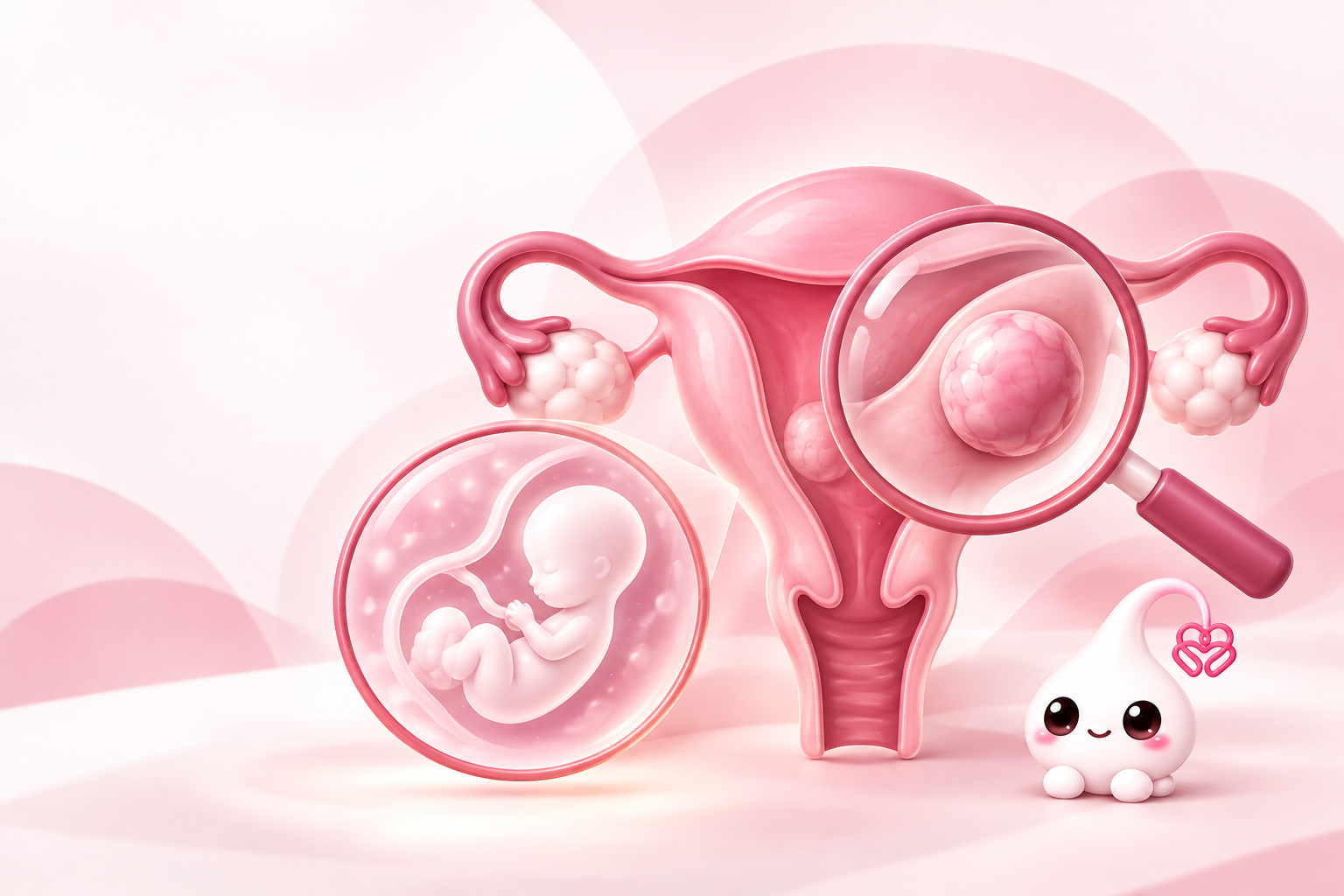
Submucosal fibroids can project into the cavity and affect implantation. Intramural fibroids are within the muscle, so distortion of the cavity needs assessment. Subserosal fibroids grow outward and usually have less direct effect on implantation; evidence that their removal improves fertility is limited.
Assessment when planning pregnancy
Ultrasound records location, number and size. Saline ultrasound or hysteroscopy may help if the cavity is unclear; MRI may be useful for more complex planning. Report heavy periods, anemia, pain, pressure, pregnancy loss and previous uterine surgery. Other fertility factors and your partner should also be assessed rather than assuming fibroids explain everything.
Does every fibroid need surgery?
Observation may be reasonable if there are no important symptoms or cavity distortion. Treatment may be discussed for symptoms affecting daily life, anemia or a distorted cavity. Removing some cavity-affecting fibroids may help, but surgery cannot guarantee pregnancy and is not automatically advised solely to improve fertility.
Choosing treatment with fertility in mind
Hysteroscopic, laparoscopic, robotic-assisted or open surgery depends on location, number, depth and uterine repair needs. Discuss bleeding, adhesions, recovery and when pregnancy attempts can resume. Procedures that preserve the uterus are not all equivalent for future pregnancy; embolization and ablation also need discussion of reproductive limitations.
If you are already pregnant
Many people with fibroids have successful pregnancies and births. Monitoring considers pain, preterm birth risk and fetal position, among other factors. Care usually focuses on observation and symptoms; a fibroid alone does not determine the need for cesarean birth. Persistent or severe abdominal pain, significant vaginal bleeding, fever or fainting require immediate contact with your prenatal team or medical care. Do not assume all abdominal pain is due to a fibroid.
Sources
This guide provides general information. Your symptoms, test results and treatment plan require individual clinical assessment.
Back to all guides